
The Italian Catholic Federation has a rich history that extends back to the early 1900s.
Origins
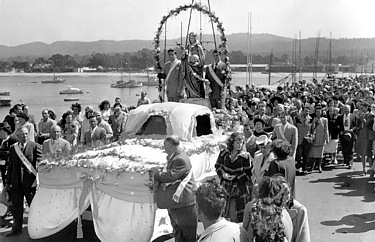
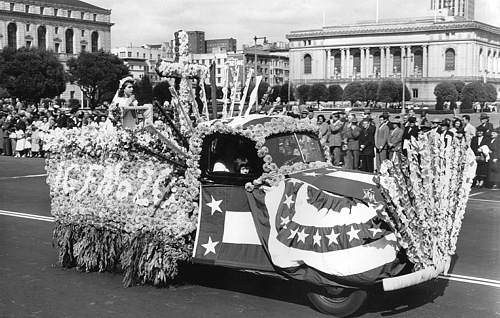
ICF Convention Float, Oakland, 1948
The Italian Catholic Federation has a long and proud tradition. It offers it members a chance to share their heritage and faith in a friendly and supportive atmosphere. Always a family organization, many members come from families that have been active in the federation for several generations. It is a vital force in many parishes and dioceses, offering support to local pastors and bishops. Aware that knowledge of the past is essential to understanding the present, members of the ICF celebrate its history and learn from the history of immigration in the United States.
In the early 20th century, after years of immigration and assimilation in the United States, Italian immigrants were beginning to lose their culture and faith. Church attendance and Catholic observances slowly declined among the immigrants, as did their pride in being Italian. Their rich Italian Catholic heritage was at risk of being lost.
The Beginning
In 1924 the concept of a lay apostolate organization, to unite Italian Catholics in their Faith, community, and pride in shared heritage, was formulated in San Francisco by two remarkable men. It would be called the Italian Catholic Federation, and the men who envisioned it were ICF co-founders Luigi Providenza and Father Albert Bandini.
The Founders
Luigi Providenza
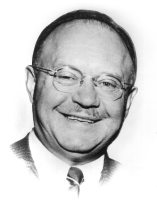
Luigi Providenza, born in Genoa, was a radical idealist who rose to the position of Chairman of Italy’s Popular Party. At 26, following three Communist attempts on his life, he emigrated to America and settled in San Francisco where he got a job with the weekly Italian paper, L’Unione. Calling upon Italian families, he was appalled to find that many of them had lost their Faith. He decided that something had to be done, and, after much prayer and soul-searching, he formulated a plan for a kind of fraternal/apostolate organization. But when he proposed it to influential Italians he knew through his union and publishing contacts, he was disappointed to receive little encouragement. So the resourceful and stubborn Providenza took his idea to local priests, and found the ears, the enthusiasm, and the evangelical spirit he sought. The concept took force, yet Luigi Providenza was a visionary and a promoter, not a writer, a businessman, or a planner, and how to structure this organization eluded him. He was to later say, “I had the idea of the ICF, but another man gave it form and a program which gave me something concrete around which I could organize people—plain, everyday people.” That other man was Reverend Albert R. Bandini.
Reverend Albert R. Bandini
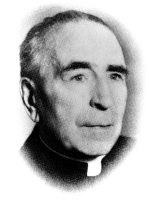
Bandini, son of an influential Florentine family, was a scholar, a poet, and an attorney. He came to California to help his beloved Italians at a time when American bishops were calling for the services of Italian speaking priests. Teaching in New York, he came under the eye of Theology Professor Reverend Edward J. Hanna, who would later become the Archbishop of San Francisco. Rev. Bandini followed the Professor to San Francisco in 1915 and began doing pastoral work. He too was chagrined at the spiritual state of many Italians he ministered to. Inevitably, Rev. Bandini’s path crossed that of Luigi Providenza and the two men, the practical Genovese and the intellectual Florentine, found themselves of one mind about founding an organization for local Italian-Americans. They were remarkably well suited to succeed in such an undertaking, as Providenza was a vigorous populist, with an immediate connection with the minds of the immigrants, and Bandini’s formal education, legal mind and literary skills would serve the Federation well.
The Founding
Providenza and Rev. Bandini set themselves to work in 1924, assisted by enthusiastic and dedicated people — laymen, laywomen, and priests. Bandini began roughing out an organizational structure, and Luigi began gathering people together. On June 15th the first organizational meeting took place at the Church of the Immaculate Conception, deep in San Francisco’s Mission District. Present were: John Musso, chairman, Nicola Pagliettini, Carmela Bedolla, Katie Musante, Guilio Marchetti, Pasquale Magliori, Leonard Ventimiglia, Amadeo Sola, Camillo Savarese, Serafina Canessa, Luigi Providenza, Rev. Antonio Durantini O. F. M., and Rev. Albert Bandini. The group, awaiting the results of discussions with Archbishop Edward J. Hanna concerning his approval of an ICF, first termed themselves a “parochial society” within the parish. Rev. Durantini, Pastor, deserves much credit for hosting the meeting before receiving formal approval from the Bishop.
Bishop Hanna’s approval was given in October, 1924, and soon afterwards the Italian Catholic Federation was duly incorporated. Branch #1 at Immaculate Conception Church was formed on December 7th, with 300 members signing up.
The original Central Council consisted of the Founding Members: Rev. Antonio Durantini, John Musso, Nicola Pagliettini, Katie Musante, Guilio Marchetti, Pasquale Magliori, Leonard Ventimiglia, Amadeo Sola, Camillo Savarese, Luigi Providenza, and Rev. Albert Bandini.
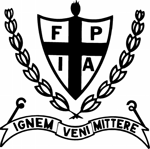
The Italian Catholic Federation logo consists of four letters positioned around a cross. They are the initials of these words: Faith, Patria (or Fatherland), Italy, and America. Below the cross is the Latin phrase IGNEM VENI MITTERE. The English translation of this phrase is I CAME TO LIGHT A FIRE, which is the motto of the Federation.
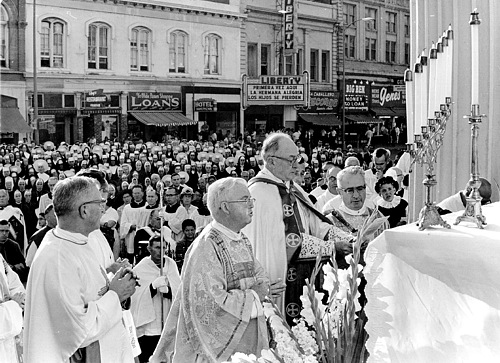
As branches began rapidly to open in the coming years, a pattern emerged which involved a large installation celebration some time following the formation meeting, which typically coincided with the giving of a mission by an ICF Missionary Priest. Installations would begin with a morning Mass, followed by a civic ceremony and/or luncheon, a parade through the streets of the city, drill team and drum corps competitions, the selection of a queen and her court, and, finally the banquet.
The Present
In organizing the founding group and seeing the opening of the first ICF branch, Providenza and Bandini saw the initial realization of their goal to “awaken a more intense Christian life among the Italian population in California.” The organization which became the Italian Catholic Federation was envisioned to be “primarily a parochial society upon which the local pastor could rely on for his work.” But it was to become something much more than that. It would encompass a spirit and vitality that decades later would grow, at its peak, to 30,000 members in 225 branches in five states, and whose charitable works within and beyond parish boundaries would assist, elevate, enrich, and invigorate the lives of countless numbers of people.
Oral History
Interviews about Luigi Providenza and the ICF
Heritage Videos
- Tom Poggi and Al Teglia
Part 1 Part 2 Part 3 - David Botta, Carmen Kilcullen and Robert Acquistapace
Part 1 Part 2 Part 3
History of the ICF
Film on Luigi Providenza
Pictorial History
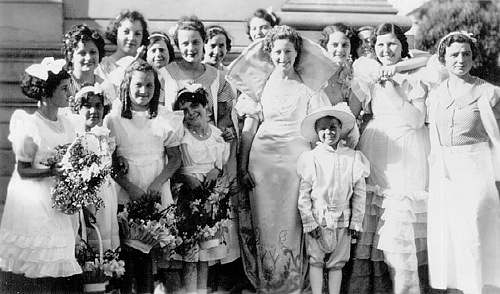
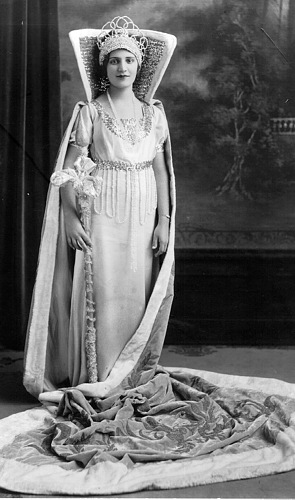
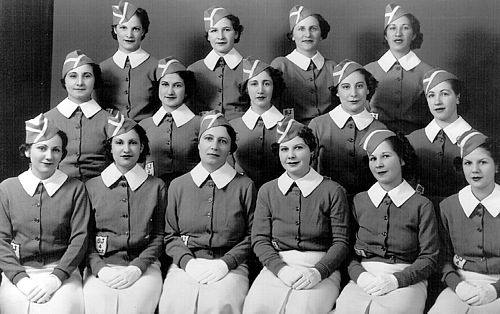
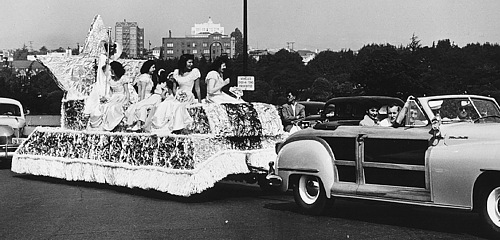



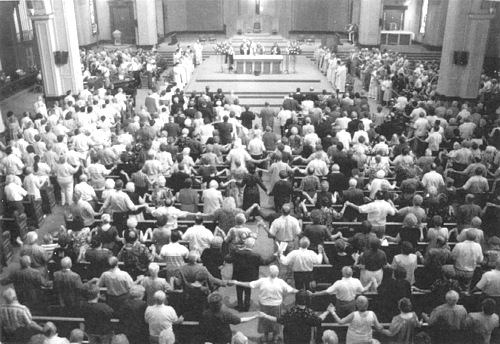
Official ICF Song: Noi Vogliam Dio (We Love God)
The ICF’s official song, Noi Vogliam Dio, is adapted from a hymn from Italian folk tradition which became the national anthem of the Papal States at the beginning of the nineteenth century. Its music and lyrics are both of anonymous origin.
Play SongNoi Vogliam Dio
Noi Vogliam Dio, ch’Ei ci protegga
Ch’Egli ci guidi sul buon sentier,
Se nella lotta Ei ci sorrega,
Sara’ del male vinto il poter.
Sorge da queste squadre-il grido della fe’
Noi vogliam Dio, ch’e’ nostro Padre
Noi vogliam Dio, ch’e’ nostro Re
Noi vogliam Dio, ch’e’ nostro Padre
Noi vogliam Dio, ch’e’ nostro Re.
In questa terra libera e forte
Portiamo il fervido nostro vigor,
Pronti a difender, nobil coorte
Di Cristo il nome che ci sta in cuor.
Sorge da queste squadre-il grido della fe’
Noi vogliam Dio, ch’e’ nostro Padre
Noi vogliam Dio, ch’e’ nostro Re
Noi vogliam Dio, ch’e’ nostro Padre
Noi vogliam Dio, ch’e’ nostro Re.
We Love God
O we want our God to protect us,
And to guide us in the best way.
If in the struggle He will aid us,
From evil shall we win the fray.
Rise up all you faithful, Uphold the Faith and sing:
O we want God Who is our Father;
O we want God Who is our King.
O we want God Who is our Father;
O we want God Who is our King
In this Land of strength and freedom
We gave our vigor from the start;
Quick to defend, O noble people,
The name of Christ that’s in our heart.
Rise up all you faithful, Uphold the Faith and sing:
O we want God Who is our Father;
O we want God Who is our King.
O we want God Who is our Father;
O we want God Who is our King
Mother Cabrini Shrine (Burbank, California)
St. Frances Xavier Cabrini
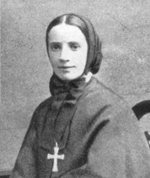
By the time of her death in 1917, Mother Cabrini had established 67 schools, hospitals and orphanages throughout the U.S., South America and Europe, and her order numbered in the thousands.
She is the first naturalized US citizen to be declared a saint (July 7, 1946).
History of the Mother Cabrini Shrine in Burbank
Mother Frances Xavier Cabrini came to San Fernando Valley, California in the late 1800s. In 1880, she founded the Missionary Sisters of the Sacred Heart which then built the Villa Cabrini Academy.
In 1916 Mother Cabrini built a small chapel in honor of the Blessed Mother above Villa Cabrini Academy, atop Mount Raphael, for the residents of the San Fernando Valley. The chapel was said to protect their crops and shelter the residents from the ravages of fire. During the war, it also served as a beacon to pilots. Mother Cabrini made daily mediation visits to the chapel while overseeing a new academy for girls.
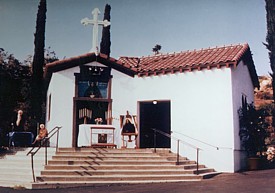
In 1970, the land on which the chapel was built was sold to a developer. However, members of the Italian Catholic Federation in the Archdiocese of Los Angeles raised money to rescue the chapel and moved it down the mountain in 1973 to St. Francis Xavier Church in Burbank where they later restored it with stained glass windows, a mosaic of St. Cabrini, new tile, and more. Fr. William C. O’Connor, St. Francis Xavier Church pastor and San Fernando Valley District ICF Chaplain at the time, headed the renovation committee. Many hours of planning went into the project and many donations were made in the form of construction-related labor and historical artifacts for the collection. A formal dedication ceremony of the restored chapel was held on the grounds of St. Francis Xavier Church on Sunday, September 14, 1975.
A library sponsored by the ICF was built under the direction of ICF Branch 102 member Orlando T. Granata in 1993. Mr. Granata also supervised the moving of the chapel to its new location on the St. Francis Xavier Cabrini Church property. The library contains historical and contemporary works about the immigrant saint, and adjoins the chapel.
Today, the chapel and library collectively form a shrine in St. Frances Xavier Cabrini’s honor.
Location
The Mother Cabrini Shrine is located behind St. Frances Xavier Church, 3801 Scott Road, Burbank, California.
Pilgrimages
In keeping with tradition, a special Mass honoring Mother Cabrini along with a Pilgrimage to the Mother Cabrini Shrine are held on the second Sunday in November of each year, featuring a procession to the Shrine which begins at St. Francis Xavier Church. All ICF branches, parishioners and affiliated Saint Francis Mother Cabrini Groups in the Southern California area are encouraged to join the Mass, Pilgrimage and Luncheon. Those who have difficulty walking are welcome to join in the procession by using automobiles to drive across the church grounds to the location of the Shrine.
Hours
In addition to the annual November Pilgrimage, the Mother Cabrini Shrine is open between 9:00am – 1:00pm every 2nd Sunday of January, February, April, June, September, and November, or by special appointment.
Support
In order to continue maintaining the Chapel and Library, the ICF Chapel and Library Committee encourages all ICF members and Mother Cabrini Faithful to consider touring the Chapel on your next visit to Southern California and supporting the Chapel Facility by making a donation to:
ICF Mother Cabrini Chapel and Library Building Maintenance Fund
3801 Scott Road, Burbank, CA 91504
Attention: ICF Mother Cabrini Chapel Committee
Contact Information
For more information about visiting the Mother Cabrini Shrine, please contact:
Carmelo Sabatella
Phone: (626) 372-7812
Email: cas1810@aol.com